Welcome to a journey through time, taste, and tradition. While Nepal is famed for its towering Himalayas and ancient temples, it also harbors a rich, lesser-known history of brewing that is as diverse as its people.
Today, the beer scene in Nepal is booming, a vibrant blend of age-old indigenous practices and a rapidly growing modern brewing industry. Whether you’re a craft beer aficionado or a curious traveler, there’s a story in every sip.
Let’s explore how a nation known for high-altitude trekking became a hotbed for brewing.
The Ancient Roots – Traditional Brews of the Himalayas
Long before gleaming stainless steel tanks and international lagers arrived, the indigenous communities of Nepal were master brewers. For centuries, fermented grain beverages have been central to social, cultural, and religious life, particularly among the Newar, Sherpa, Rai, and Limbu communities.
These aren’t just drinks; they are vital components of festivals, hospitality, and even offerings to the gods.
Meet the Ancestors of Modern Beer
Here are the three legendary traditional drinks you must know about.
- Chhyang (छ्याङ)
Think of this as the sweet, cloudy cousin of beer. Made primarily from fermented rice (and sometimes millet or corn), Chhyang is a staple in many Nepali homes. It’s milky white, has a mild, sweet-and-sour taste, and a relatively low alcohol content. It’s refreshing in the summer and warming in the winter. - Tongba (तोङ्बा)
This is the quintessential drink of the eastern Himalayas. It’s not just a drink; it’s an experience. Fermented whole grain millet is placed in a large wooden or bamboo container (also called a tongba). Hot water is poured over the grains, and the resulting warm, mildly alcoholic brew is sipped through a special bamboo straw with a filter at the bottom to keep the grains out. The best part? You can keep refilling it with hot water for hours of warm, communal drinking. - Aila (ऐला)
While Chhyang and Tongba are akin to beer, Aila is the hard stuff. It’s a traditional Newari distilled liquor, clear and potent, often compared to tequila or grappa. It is ritually pure and used in many Newari religious ceremonies.
The Modern Brewing Revolution
The commercial beer landscape in Nepal is relatively young but has seen explosive growth.
Timeline of a Brewing Nation
- Pre-1970s: The market was dominated by imported beers from India, available mostly in high-end hotels and restaurants.
- Early 1980s: The first seeds of a domestic industry were sown. Nepal Brewery Company Ltd. was established, introducing the brand Star Beer. This was a pivotal moment, proving beer could be made on a large scale within Nepal.
- 1990s – The Big Leap: The real game-changer came with the liberalization of the economy. Gorkha Brewery was established in 1989 as a joint venture with Danish brewing giant Carlsberg Group. They started brewing international heavyweights like Tuborg and Carlsberg locally, forever changing the Nepali palate.
- 2000s – A National Icon is Born: In 2006, Gorkha Brewery launched Gorkha Beer, Nepal’s first premium local brand. Named after the legendary Gurkha soldiers, it became an instant national icon, symbolizing Nepali strength and pride.
- 2010s – The Craft Beer Awakening: As global tastes shifted, Nepal caught the craft beer wave. In 2013, Sherpa Brewery opened its doors as Nepal’s first craft brewery, founded by a Sherpa entrepreneur who wanted to offer high-quality, varied beer styles. They were soon followed by others like Yak Brewing Company, bringing styles like Kölsch, Red Ale, and Witbier to a market dominated by lagers.
Fast Facts: The Nepali Beer Industry Today
The industry is no longer a niche market; it’s a significant economic powerhouse.
- Dominant Style: The market is still heavily skewed towards strong lagers (around 6-7% ABV), which are preferred by many local consumers.
- Key Players: The market is led by giants like Gorkha Brewery (Tuborg, Carlsberg, Gorkha, San Miguel) and Tigers Brewery (Tensberg, Nepal Tiger).
- Growth: The beer market in Nepal has been growing consistently, driven by a young population, increasing disposable income, and a growing tourism sector.
- Local Ingredients: While malt and hops are largely imported, some craft breweries are experimenting with local ingredients like Himalayan barley and even timur (Sichuan pepper) to create unique Nepali flavors.
Experience It Yourself – Brewery Tours in Nepal
Want to see where the magic happens? Brewery tourism is still in its infancy in Nepal, but one pioneering brewery has flung its doors open to the public.
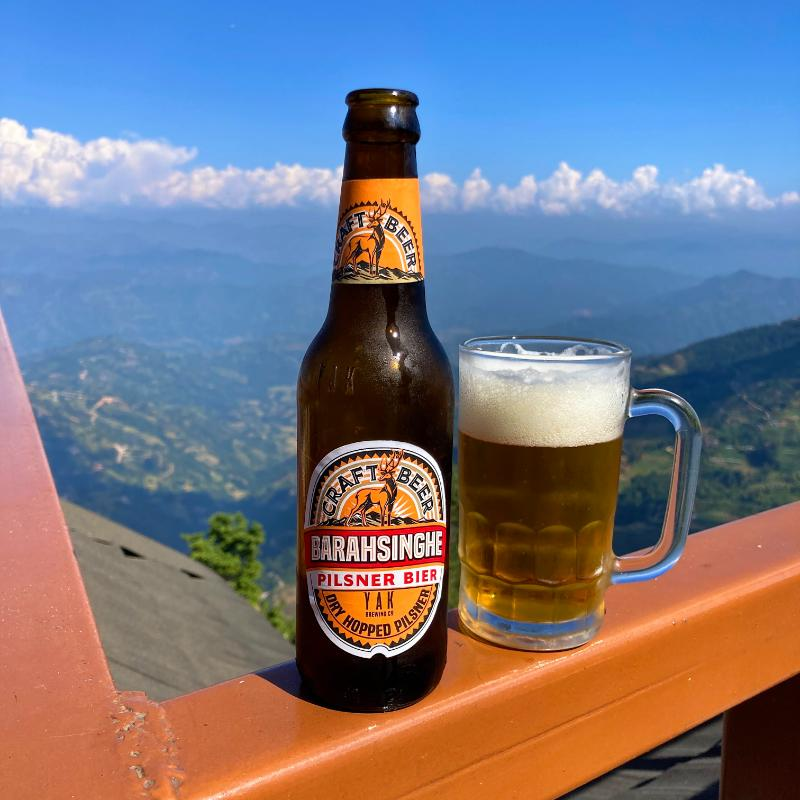
⭐ The Featured Tour: Yak Brewing Company (Barahsinghe Beer)
Located amidst the stunning hills of Kurintar, about halfway between Kathmandu and Pokhara, Yak Brewing Company is currently the only brewery in Nepal offering regular public tours.
- The Experience: This isn’t just a factory walk-through. It’s a full sensory experience in a state-of-the-art facility. You’ll see the entire brewing process, from milling the grain to bottling the final product.
- The Highlight: The tour concludes in their beautiful taproom with a guided tasting of their core range, including their crisp Pilsner, fruity Dunkelweizen, and refreshing Witbier. The views of the Trishuli River valley from the brewery are an added bonus.
- Practical Info:
- Location: Kurintar, Chitwan (easily accessible on the Prithvi Highway).
- Booking: It’s recommended to book in advance through their website or contact them directly.
- Tip: It makes for a perfect, refreshing stopover on a road trip between Kathmandu and Pokhara.
While other major breweries like Gorkha Brewery do not currently have public tour programs, you can enjoy their fresh drafts in countless pubs and restaurants across Thamel in Kathmandu and Lakeside in Pokhara.
A Toast to the Future
From the smoky fireside chats over a pot of Tongba in a mountain village to the clinking of glasses filled with fresh craft beer in a Kathmandu pub, the story of beer in Nepal is a testament to a culture that honors its past while boldly embracing the future.
So, the next time you’re in Nepal, look beyond the trekking trails. Raise a glass of something local and taste the history in every drop.
Cheers!